
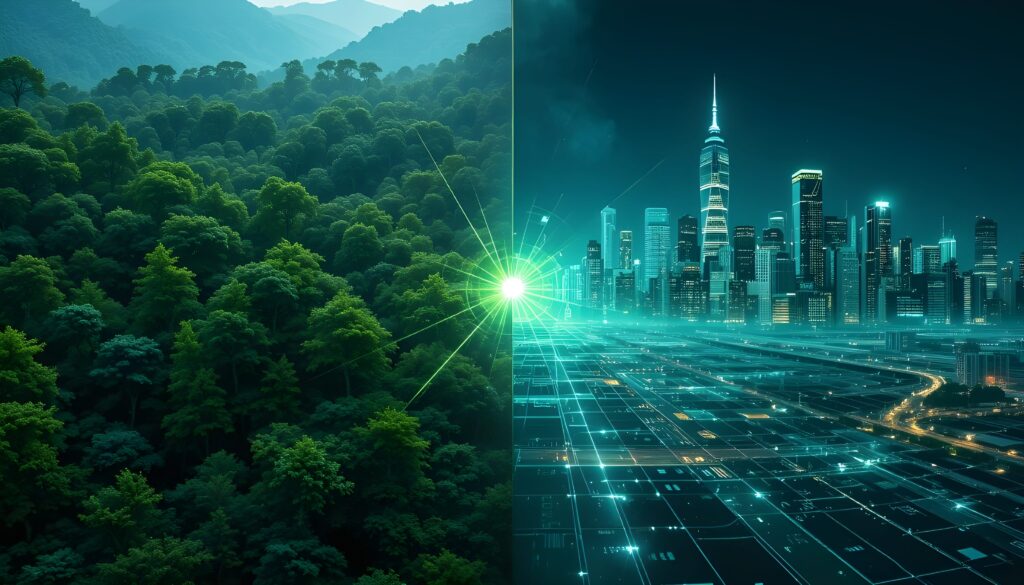
In a world where forests are vanishing faster than we can replant them, oceans are choking on plastic, and species are blinking out of existence at an alarming rate, hope might seem like a rare commodity. But what if I told you that the same technology powering your smartphone’s voice assistant or recommending your next binge-watch could be the key to healing our battered ecosystems? Enter AI-optimized ecosystem restoration and rewilding planning—a fusion of cutting-edge tech and age-old ecology that’s turning the tide on environmental degradation.
I’ve always been fascinated by nature’s resilience. Think about how a scorched forest can sprout green shoots after a wildfire, or how abandoned farmlands can transform into thriving wildlife havens. Yet, human interference has pushed many ecosystems to the brink, making natural recovery a slow, uncertain process. That’s where AI steps in, not as a magic wand, but as a super-smart toolkit that amplifies our efforts. By crunching massive datasets—from satellite images to soil samples—AI helps us predict, plan, and execute restoration projects with precision we’ve never had before.
This blog dives into how AI is revolutionizing ecosystem restoration and rewilding. We’ll explore the basics, the tech behind it, real-world success stories, and even the hurdles we need to overcome. Along the way, I’ll share some visuals to bring these concepts to life. Whether you’re an eco-enthusiast, a tech geek, or just someone who cares about the planet, stick around— this is about building a greener future, one algorithm at a time.
Understanding Ecosystem Restoration and Rewilding
What is Ecosystem Restoration?
At its core, ecosystem restoration is about bringing degraded lands, waters, and habitats back to health. It’s not just planting trees or cleaning rivers; it’s rebuilding the intricate web of life that makes these systems function. According to the UN Decade on Ecosystem Restoration (2021-2030), restoration involves actions like reforestation, wetland revival, and soil rehabilitation to combat biodiversity loss and climate change. Imagine turning a polluted industrial site into a vibrant park buzzing with birds and butterflies—that’s restoration in action.
But why now? We’ve lost about 35% of global wetlands since 1970, and deforestation continues at a rate of 10 million hectares per year. Restoration isn’t optional; it’s essential for carbon sequestration, flood control, and supporting human livelihoods. AI optimizes this by identifying priority areas—say, using machine learning to spot where soil erosion is worst or where native species could thrive again.
The Essence of Rewilding
Rewilding takes restoration a step further. It’s about letting nature take the wheel, reintroducing keystone species like wolves or beavers to restore natural processes. Coined in the 1990s, rewilding emphasizes minimal human intervention, allowing ecosystems to self-regulate. Think of Yellowstone National Park, where wolves’ return in 1995 triggered a trophic cascade: fewer elk meant more vegetation, stabilized rivers, and a boom in biodiversity.
In rewilding planning, AI shines by simulating outcomes. What if we release bison in a grassland? AI models can forecast impacts on plant diversity, soil health, and even local economies. It’s like having a crystal ball for conservation, helping avoid costly mistakes.
The Emergence of AI in Conservation
How AI Processes Vast Data
Conservation has always been data-heavy, but AI turns that deluge into actionable insights. Traditional methods rely on field surveys, which are time-consuming and limited in scope. AI, however, ingests petabytes of data from satellites, drones, camera traps, and sensors. Tools like Google’s Tree Canopy use AI and aerial imagery to map urban forests in over 350 cities, aiding heat vulnerability assessments.
Multimodal AI models, such as BioCLIP or DINOv3, combine images, audio, and genetic data to detect species and monitor changes in real-time. This “dark diversity” uncovering—spotting hidden species—fills biodiversity knowledge gaps, crucial for restoration planning.
Predictive Modeling with AI
Prediction is AI’s superpower. By analyzing historical and current data, AI forecasts ecosystem trajectories under various scenarios. For instance, climate-adapted seed tools like CAST use AI to select drought-resistant seeds, boosting survival rates by up to 50% in trials. In rewilding, AI simulates long-term changes, layering soil, hydrology, and climate data to optimize outcomes.
This shift from reactive to proactive conservation is game-changing. As one expert puts it, “Predictive AI offers a paradigm shift, leveraging data to anticipate ecological changes.” It ensures restorations are resilient to future stresses like warming temperatures.
Key AI Technologies Transforming Restoration
Machine Learning for Habitat Analysis
Machine learning (ML) is the backbone of AI-optimized planning. It classifies habitats from satellite imagery, detecting deforestation or invasive species with pinpoint accuracy. Platforms like WWF’s Forest Foresight predict deforestation weeks ahead, enabling early interventions.
In biodiversity monitoring, ML processes camera-trap millions of images via Wildlife Insights, identifying species in minutes. For rewilding, it designs wildlife corridors, connecting fragmented habitats systematically.
Simulation Tools for Scenario Planning
AI simulations are like virtual labs for ecosystems. Software like CAPTAIN uses reinforcement learning to prioritize restoration areas, balancing carbon, biodiversity, and costs. In the Atlantic Forest, it selected grids for recovery, incorporating species risks and dispersal.
Generative AI creates synthetic data for rare ecosystems, aiding digital twins like BioDT for predictive modeling. This multi-objective optimization finds “socially optimal” solutions, integrating biodiversity credits for funding.
Drones and Edge AI for Monitoring
Edge AI—processing on-device—makes remote monitoring feasible. Drones with TinyML analyze data in real-time, tracking jaguars or reef health without cloud dependency. Bioacoustic tools like Project Guacamaya detect chainsaws in the Amazon, curbing illegal activities.
In restoration, these tools verify progress: AI-optimized seeding by drones, as in MORFO projects, ensures efficient planting. The result? Cheaper, more frequent monitoring that adapts strategies on the fly.
Real-World Examples of AI in Action
Forest Restoration in the Amazon
The Amazon, Earth’s lungs, has lost 17% of its cover. AI fights back: MORFO uses drones and AI for large-scale seeding, analyzing soil to choose species. In Brazil, CAPTAIN optimized 4,800 grids, reducing extinction risks through simulated recolonization.
Google’s AI roadmap with WRI monitors ecosystems, scaling tools for community use. Benefits include faster recovery and carbon storage, with one study showing AI plans cut costs by 20-30%.
Rewilding in Europe
Europe’s rewilding boom owes much to AI. In the UK, Knepp Wildland uses bioacoustics to prove pollinator surges post-rewilding. Rewilding Europe guidelines integrate AI for Nature Restoration Plans, targeting ambitious targets.
In Romania’s Carpathia, AI models keystone reintroductions, predicting biodiversity boosts. Challenges like human-wildlife conflict are mitigated via AI hotspot predictions.
Coral Reef and Marine Projects
Oceans aren’t left out. At the University of Queensland, AI predicts coral restoration success, optimizing site selection. Tools like Global Fishing Watch use AI to track illegal fishing, protecting marine habitats.
In mangroves, ManglarIA simulates health, guiding restorations that sequester carbon and buffer storms.
Benefits and Challenges
Advantages of AI-Optimized Approaches
The upsides are immense: scalability, cost-efficiency, and precision. AI reduces analysis time from years to minutes, enabling global coverage. It democratizes conservation, empowering Indigenous communities with open platforms. Environmentally, it maximizes carbon capture and biodiversity recovery, aligning with UN goals.
Socially, it creates jobs in eco-tourism and data analysis, fostering equitable benefits.
Potential Drawbacks and Risks
But AI isn’t flawless. Data biases can skew priorities, overlooking underrepresented areas. Energy-intensive models contribute to emissions, and over-reliance might sideline local knowledge. Ethical issues arise in de-extinction tech, where AI aids rewilding extinct species but risks ecosystem disruption.
Mitigation involves participatory design, ensuring AI tools are inclusive and sustainable.
Future Prospects and Ethical Considerations
Looking ahead, 2026 horizon scans highlight TinyML and optic AI chips for revolutionized monitoring. Integrating AI with de-extinction could restore keystone functions, but ethically, we must ask: Who decides what to revive? Justice in rewilding demands addressing impacts on communities, as in Yellowstone’s ongoing debates.
The key is responsible AI: transparent, community-led, and aligned with global frameworks. With initiatives like REVIVE scaling standards-based restoration, the future looks promising.
Conclusion
AI-optimized ecosystem restoration and rewilding isn’t just tech hype—it’s a lifeline for our planet. By blending human ingenuity with machine intelligence, we’re not only healing wounds but preventing new ones. As we face 2030 biodiversity targets, let’s embrace these tools thoughtfully. After all, a restored Earth benefits us all. What are your thoughts on AI in conservation? Share below!