
Introduction
Agriculture has been the backbone of human civilization for thousands of years. However, modern farmers face increasing challenges such as climate change, labor shortages, soil degradation, and the growing demand for food. With the global population expected to reach around 9 billion by 2050, food production must increase significantly to meet demand.
To address these challenges, agriculture is entering a new era known as Smart Agriculture or Agriculture 4.0. This approach integrates advanced technologies such as Artificial Intelligence (AI), robotics, drones, and Internet of Things (IoT) into farming practices. These innovations help farmers improve productivity, reduce waste, and protect the environment.
Smart agriculture is not just about using machines—it is about making farming more efficient, sustainable, and data-driven.
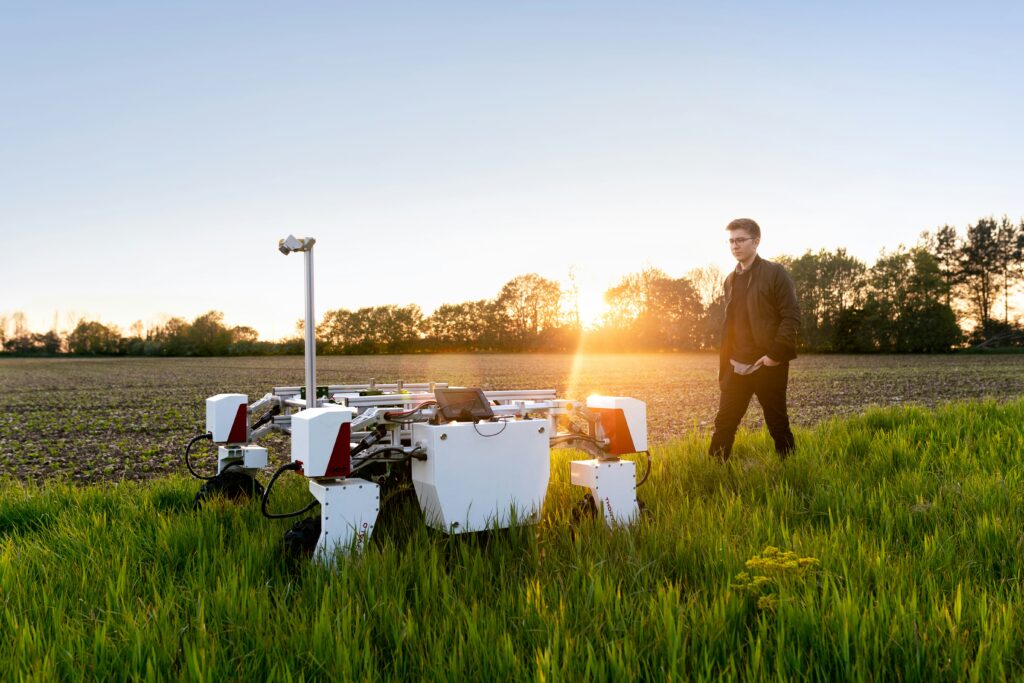
What is Smart Agriculture?
Smart agriculture refers to the use of digital technologies to monitor, analyze, and automate farming operations. It combines sensors, AI algorithms, robots, and satellite data to help farmers make better decisions.
Traditional farming often relies on experience and observation. In contrast, smart farming uses real-time data and automation to manage crops and livestock more precisely. Technologies such as AI-powered crop monitoring systems, automated irrigation, and robotic harvesters are revolutionizing agriculture worldwide.
For example, AI systems can analyze weather patterns, soil conditions, and crop health to predict yields with over 90% accuracy, much higher than traditional forecasting methods.
These technologies enable farmers to apply the right amount of water, fertilizer, and pesticides exactly where needed, reducing environmental impact while improving productivity.
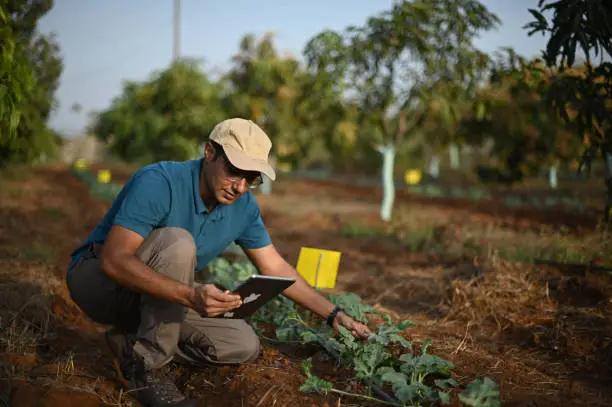
The Role of Artificial Intelligence in Farming
Artificial Intelligence plays a central role in smart agriculture. AI systems analyze massive amounts of data collected from farms and provide insights that help farmers optimize their operations.
1. Crop Monitoring and Disease Detection
AI-powered cameras and sensors can monitor crops continuously. By analyzing images of plants, AI can detect early signs of disease, pests, or nutrient deficiencies.
Some AI-powered farming robots can process hundreds of thousands of plant images every day to identify crop health issues quickly.
Early detection allows farmers to treat affected plants before the problem spreads, saving crops and reducing chemical use.
2. Precision Irrigation
Water management is one of the biggest challenges in agriculture. AI-based irrigation systems use soil sensors and weather data to determine exactly when and how much water crops need.
Advanced systems can reduce water consumption by up to 40% compared to traditional irrigation methods.
3. Yield Prediction and Farm Analytics
AI can analyze historical data, weather forecasts, and satellite imagery to predict crop yields and market trends. This allows farmers to plan planting schedules, manage supply chains, and reduce financial risks.
Studies show that around 70% of farmers using AI report improved efficiency and yields, while also reducing resource usage by 25–50%
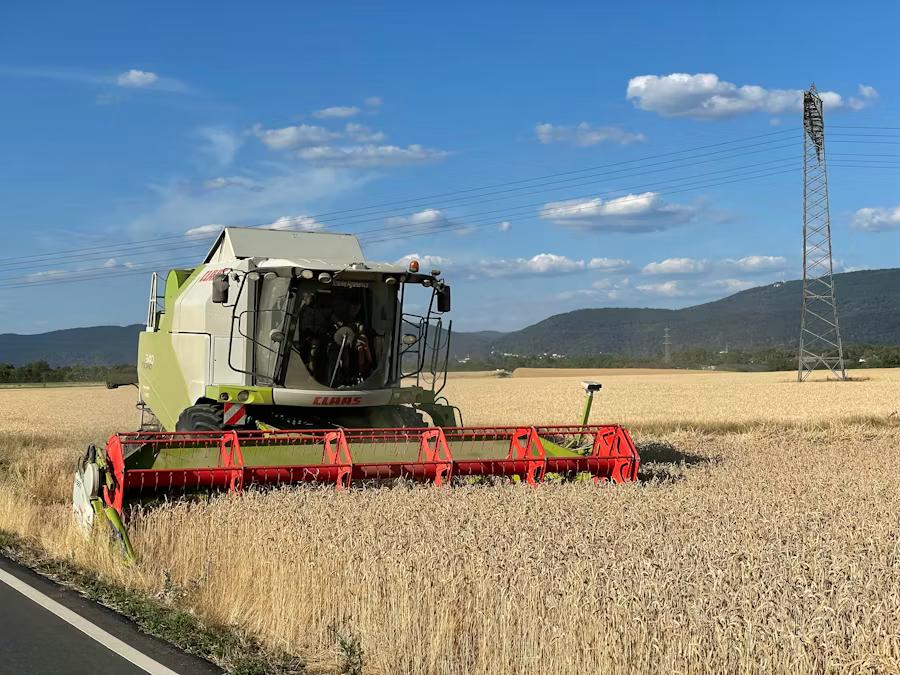
Agricultural Robots: The New Farm Workers
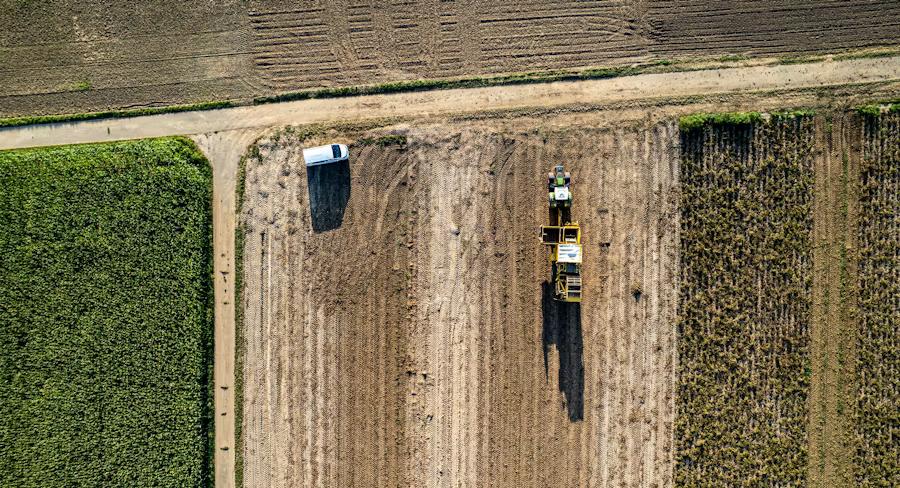
One of the most exciting developments in smart agriculture is the use of agricultural robots, also known as AgriBots.
These robots are designed to perform repetitive and labor-intensive tasks such as planting, weeding, harvesting, and monitoring crops.
The global agricultural robotics industry is growing rapidly as farms adopt automation to improve productivity and reduce labor costs.
Types of Farming Robots
1. Autonomous Tractors
Autonomous tractors can operate without human drivers. Using GPS, sensors, and AI algorithms, they can plow fields, plant seeds, and spray fertilizers with incredible precision.
These machines allow farmers to manage large fields efficiently while reducing fuel consumption and labor costs.
2. Harvesting Robots
Harvesting fruits and vegetables is traditionally a labor-intensive process. Robotic harvesters equipped with computer vision can identify ripe produce and pick it carefully without damaging it.
Some harvesting robots can pick crops 24 hours a day, increasing productivity and reducing waste.
3. Weeding Robots
Weeding robots use AI-powered cameras to distinguish between crops and weeds. They remove weeds either mechanically or by applying tiny amounts of herbicide directly to the unwanted plants.
These systems can reduce herbicide use by up to 90%, helping protect soil health and surrounding ecosystems
.
4. Drone Technology
Drones are also becoming an essential tool in modern farming. Equipped with cameras and sensors, drones can scan fields, monitor crop health, and spray fertilizers or pesticides.
Studies show that drone-based spraying can reduce water usage significantly while improving crop yields.
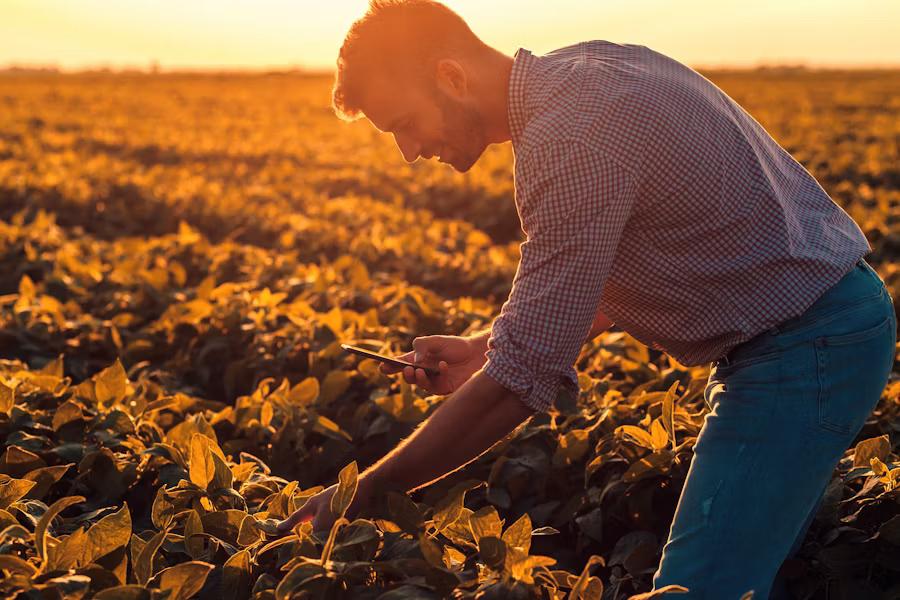
Benefits of Smart Agriculture
Smart agriculture offers several advantages for farmers, consumers, and the environment.
1. Increased Productivity
Automation and data-driven decisions help farmers produce more crops with fewer resources.
Robotic harvesting and AI-based monitoring ensure that crops are planted, maintained, and harvested at the optimal time.
2. Reduced Labor
Shortages
Many countries face labor shortages in agriculture. Robots can perform repetitive tasks such as planting, spraying, and harvesting, reducing dependence on manual labor.
In some cases, agricultural robots can reduce labor costs by 20–30%.
3. Environmental Sustainability
Smart farming promotes sustainable agriculture by reducing chemical usage, conserving water, and improving soil health.
Precision farming techniques ensure that resources are used only where needed, minimizing waste and pollution.
4. Better Decision Making
AI systems provide farmers with valuable insights into crop conditions, weather forecasts, and market trends.
With real-time data, farmers can make informed decisions that improve profitability and reduce risks.
Challenges of Smart Farming
Despite its many benefits, smart agriculture also faces several challenges.
High Initial Costs
Advanced technologies such as AI systems, robots, and sensors can be expensive, making them difficult for small farmers to adopt.
Technical Knowledge
Farmers may require training to operate complex digital tools and data analytics systems.
Connectivity Issues
Smart farming technologies rely on internet connectivity, which may be limited in rural areas.
However, as technology becomes more affordable and accessible, these barriers are gradually decreasing.
The Future of Smart Agriculture
The future of farming will likely be a combination of AI, robotics, biotechnology, and advanced sensors working together to create highly efficient agricultural systems.
In the coming years, we may see:
-
Fully autonomous farms operated by AI
-
Robots performing most field tasks
-
AI-powered climate prediction for agriculture
-
Blockchain systems for food supply transparency
-
Smart greenhouses controlled entirely by AI
Governments and companies worldwide are investing heavily in agricultural technology to ensure food security and sustainable farming.
Conclusion
Smart agriculture represents a major transformation in the way food is produced. By combining AI, robotics, and data analytics, farmers can increase productivity, reduce costs, and protect natural resources.
As global challenges such as climate change and population growth continue to impact agriculture, technology will play a crucial role in ensuring sustainable food production.
The farms of the future will not only rely on tractors and tools but also on algorithms, sensors, and intelligent robots working together to feed the world.