
 Hey everyone,
Been a while since the last post here on the site, but with everything going on around climate, nature, and tech lately, it felt like the right time to drop another one. This is all about how technology is actually starting to make a real dent in saving the planet as of 2026 – not just promises and prototypes, but stuff that’s getting built, deployed, and used right now. No fancy images or graphics this time, just straight thoughts from someone living in the middle of Delhi’s dust and traffic, trying to figure out what actually helps.
2026 has this different energy compared to even a year ago. The hype cycle has cooled off a bit, and what’s left is more grounded: projects commissioning, costs dropping, and real-world results showing up.
Energy Storage: Sodium-Ion Batteries Taking Off
Take energy storage, for example. Sodium-ion batteries are finally moving from labs to streets. They don’t need rare lithium, they’re made with stuff we have plenty of (like salt), they’re safer, and prices are falling fast. In India, we’re seeing the first commercial systems roll out for homes, industries, and even electric two-wheelers. Deployment is expected to really kick in around here starting this year, especially for light mobility like scooters and short-range stuff. Big solar farms in Rajasthan and Gujarat are pairing them with panels so power doesn’t just vanish when the sun goes down. Here in Delhi, societies and small businesses are starting to look seriously at rooftop solar plus these batteries – payback periods are shrinking to 4-5 years in some cases, and it means fewer blackouts and less reliance on smoky diesel gensets. It’s not everywhere yet, but the momentum is building, and it’s a big step toward making renewables reliable without depending on tricky supply chains.
Eyes in the Sky: AI and Satellites Watching Over Nature
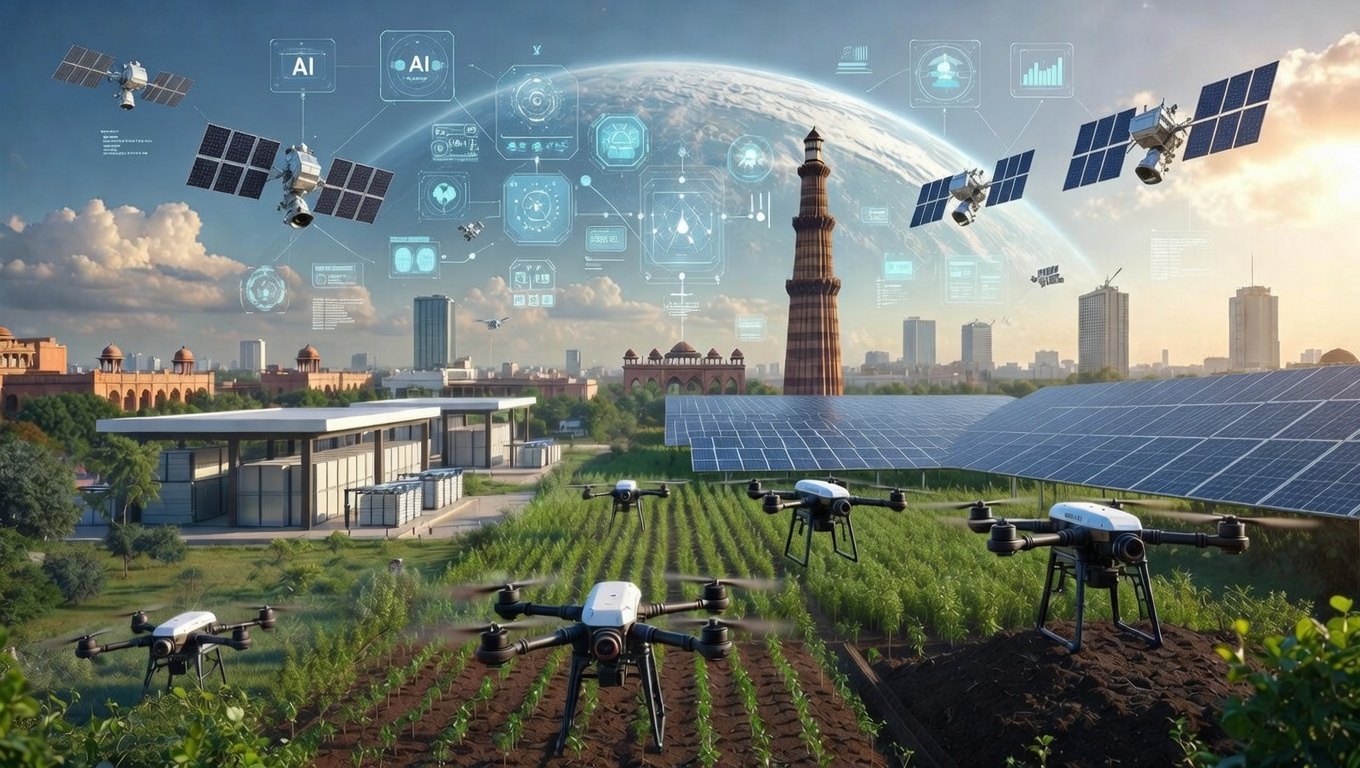
Then there’s the way AI and satellites are basically giving the planet constant health check-ups. High-resolution imagery comes down every day, and AI sifts through it in minutes: spotting fresh deforestation in remote areas, methane plumes from farms or oil sites, illegal logging, even poaching heat signatures at night. Tools like these are already helping catch problems early instead of finding out months later when it’s too late. Closer to home, similar tech could track air quality patterns over the city, monitor encroachments along the Yamuna, or watch the Aravallis for illegal mining. Tiny low-power AI chips (the kind called TinyML) are going into sensors in national parks too – no constant internet or big batteries needed. They help predict animal movements, like where elephants might cross highways, so warnings or underpasses can go in before accidents happen. It’s quiet, behind-the-scenes stuff, but it’s saving lives on both sides – human and wildlife.
Smarter Food Systems: Precision Fermentation Changing the Game
On the food front, precision fermentation is one of the more mind-blowing shifts. Microbes in big vats get programmed to produce real dairy proteins, meat-like textures, or other ingredients without any animals involved. No methane from cows, way less land and water use. A big facility in Gujarat (from a company teaming up locally) is on track to start operations in the second half of this year, with whey protein production ramping up into 2027. We in India already lean heavily plant-based with dals, soya, and paneer alternatives, but this tech could make those options even tastier, cheaper, and more scalable – cutting emissions while feeding more people without clearing more forests. It could also cut down on those huge whey imports we rely on now.
Other Breakthroughs: Carbon Capture and Beyond
Carbon capture is also getting less futuristic. Direct air capture machines and point-source systems are scaling up, some turning the pulled CO2 into building materials like concrete that’s actually stronger or into fuels. With India’s massive construction wave, greener concrete could make a big difference without adding to the emissions problem. Geothermal is going modular too – smaller, quicker-to-build plants that pull steady heat from the earth, less dependent on sun or wind.
Conclusion: Hope with Eyes Wide Open
Of course, none of this is perfect. AI data centers are energy hogs themselves, battery mining still has environmental costs in some places, and if we keep consuming at crazy levels, no amount of tech will outrun the damage. But right now, it feels like we’re past the “someday” stage and into the “it’s happening” phase. Policies are catching up, tenders are flying, costs are dropping, and more people are actually using these tools.
It gives a bit of hope, honestly. Not blind optimism, but the kind where you think maybe we can buy nature some time to recover if we keep pushing in the right directions. Whether that’s installing a few solar panels, cutting down on meat a couple days a week, supporting better policies, or just spreading awareness – every bit helps, and the tech is starting to make those bits go further.
What have you noticed around you lately? Any green tech popping up in your area, or small changes you’re making that feel meaningful?
Comments are open – would love to hear what’s on your mind.