
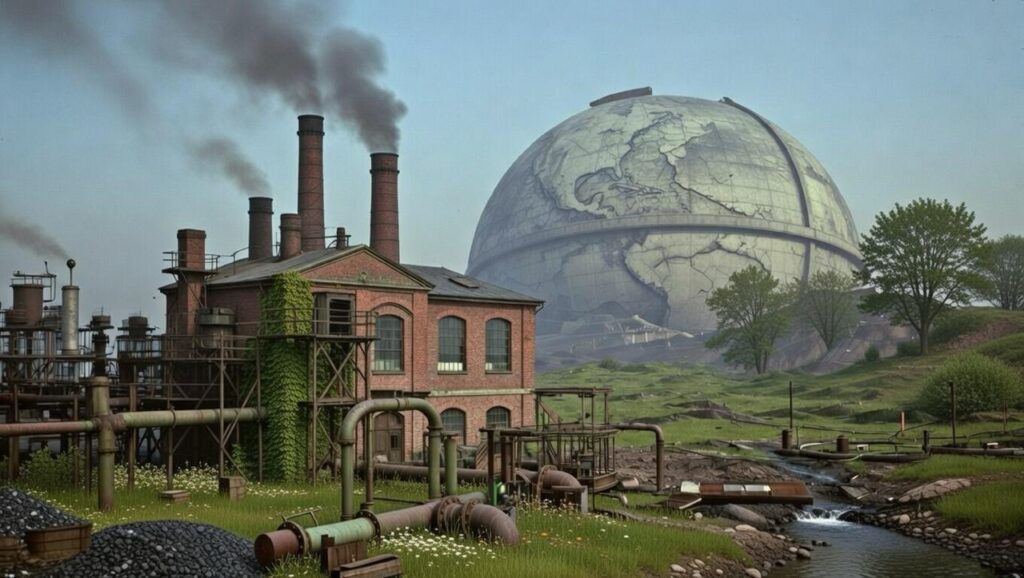
In today’s world, industrial expansion races ahead at unprecedented speed. Factories sprout across landscapes, production scales skyrocket, and nations chase economic dominance in the global market. This surge is hailed as the ultimate marker of progress and success. Yet, beneath the surface, nature is paying a heavy, often silent price.
Since the Industrial Revolution, human life has transformed dramatically: machines replaced manual toil, mass production slashed costs, and consumerism exploded. Technological leaps now enable faster, cheaper output than ever. But this acceleration comes with steep environmental costs that threaten long-term survival.
The Hidden Costs: How Industry Harms the Environment
1. Air Pollution and the Climate Emergency
Factories remain heavily reliant on fossil fuels—coal, oil, and natural gas—for power. Burning these releases massive carbon dioxide (CO₂) and other greenhouse gases, trapping heat and driving global warming.
As of 2025, fossil fuel CO₂ emissions hit a record 38.1 billion tonnes, up 1.1% from the prior year, per the Global Carbon Project.
Atmospheric CO₂ concentrations reached around 425.7 ppm—52% above pre-industrial levels.
Global temperatures continue setting records, with recent years breaching key thresholds and projections indicating likely overshoot of 1.5°C warming soon.
This pollution doesn’t just fuel climate change; it directly harms health. In industrial hubs, poor air quality triggers respiratory issues, asthma, and worse—especially among children and the elderly. Governments struggle to balance job creation and economic gains against public health and environmental protection.
2. Water Pollution: Poisoning Life’s Essential Source
Manufacturing by-products often include toxic chemicals. When untreated waste enters rivers and lakes:
Aquatic life dies off.
Ecosystems collapse.
Communities face contaminated drinking water and irrigation sources.
This creates cascading health risks and irreversible damage.
3. Deforestation and Habitat Destruction
To accommodate factories, warehouses, highways, and mining, vast forests are cleared. Trees, vital for absorbing CO₂, producing oxygen, regulating climate, and sustaining biodiversity, vanish—leading to species loss and even extinctions.
4. Overexploitation of Finite Resources
Industries devour raw materials: iron, copper, lithium, water, and fossil fuels. Mining expands globally, but Earth’s reserves aren’t infinite. Continued extraction at current rates poses ethical dilemmas for future generations and sustainability.
5. Exploding Waste and the Throwaway Culture
Industrial output generates mountains of plastic, electronic, and chemical waste. Landfills overflow, oceans choke on plastics, and short-lived products accelerate the cycle.
Fast fashion exemplifies this harm: massive water and chemical use for dyeing, followed by rapid disposal, pollutes rivers and boosts emissions.
6. The Tech Sector’s Hidden Footprint
Data centers guzzle electricity (often fossil-fueled), while mining rare earths for devices and EVs devastates landscapes. Innovation brings benefits, but production carries unseen costs.
The Bright Side: Industry’s Essential Role in Modern Life
Industries aren’t villains—they employ millions, supply life-improving goods (medical devices, transport, communication), and lift people out of poverty. Modern society depends on them.
The real problem? Uncontrolled growth prioritizing short-term profits over long-term ecological health. In competitive markets, regulations are sometimes bypassed.
Global Responses: Progress, Challenges, and Conflicts
Governments enact pollution laws and join international pacts like the Paris Agreement to cut emissions and promote sustainability. Yet enforcement lags, especially in developing nations where strict rules could hinder growth.
Climate change manifests in melting glaciers, rising seas, extreme weather (floods, droughts, storms), disrupted farming, and threats to coastal cities—ultimately harming economies too.
Awareness grows:
. Renewables like solar and wind surge, with clean energy investments outpacing fossils.
.Electric vehicles, green buildings, and energy-efficient tech gain traction.
.Circular economy models push reuse and recycling.
.Companies invest in carbon capture and better waste systems.
But change remains slower than expansion. Consumers fuel demand for cheap goods—shifting to sustainable choices could drive adaptation.
Developed nations bear historical responsibility for emissions, while developing ones demand growth rights—fueling tense global negotiations.
Related issues include urbanization (cement/steel emissions, lost green spaces), industrial agriculture (chemical runoff, biodiversity loss), and global supply chains (emissions from shipping/trucking/air freight).
The Path Forward: Sustainable Development as the Only Viable Future
.Experts agree: sustainable development—meeting today’s needs without compromising tomorrow’s—is essential. This requires:
.Cleaner technologies and waste reduction in industries.
.Strict enforcement of environmental laws by governments.
. Behavioral shifts toward responsible consumption by citizens.
Education, innovation (green tech research, renewable infrastructure), and international cooperation are crucial, as pollution ignores borders.
Unchecked growth risks accelerated biodiversity loss, water scarcity, climate disasters, economic turmoil, and social instability. Protecting nature isn’t optional—it’s survival.
Conclusion: Choices Today Shape Tomorrow’s Planet
Industrial growth has delivered immense benefits, reducing poverty and elevating living standards. But it has also unleashed serious environmental threats. The solution isn’t halting progress—it’s transforming it.
Nature and economy are intertwined: severe damage to one undermines the other. A sustainable balance demands responsible industries, rigorous governments, and aware citizens.
The future hinges on today’s decisions. Will we accelerate green transitions, or risk irreversible consequences? The clock is ticking—let’s choose wisely.
What do you think—how can individuals in places like India contribute most effectively? Or would you like to expand on any section (e.g., fast fashion or renewables in emerging economies?